


Key Notes
• Powell provided no policy guidance — a rare move ahead of an FOMC decision.
• Markets still expect another rate cut following the recent 25 bps reduction, with Market Confidence Levels at 86%, but upcoming U.S. economic data will be the key determinant.
• Powell’s silence is seen as an effort to preserve the Fed’s monetary policy independence amid Washington’s political dynamics.
• Investors are now shifting focus to the upcoming FOMC meeting, the latest inflation data, and the Trump administration’s announcement of the next Fed Chair candidate.
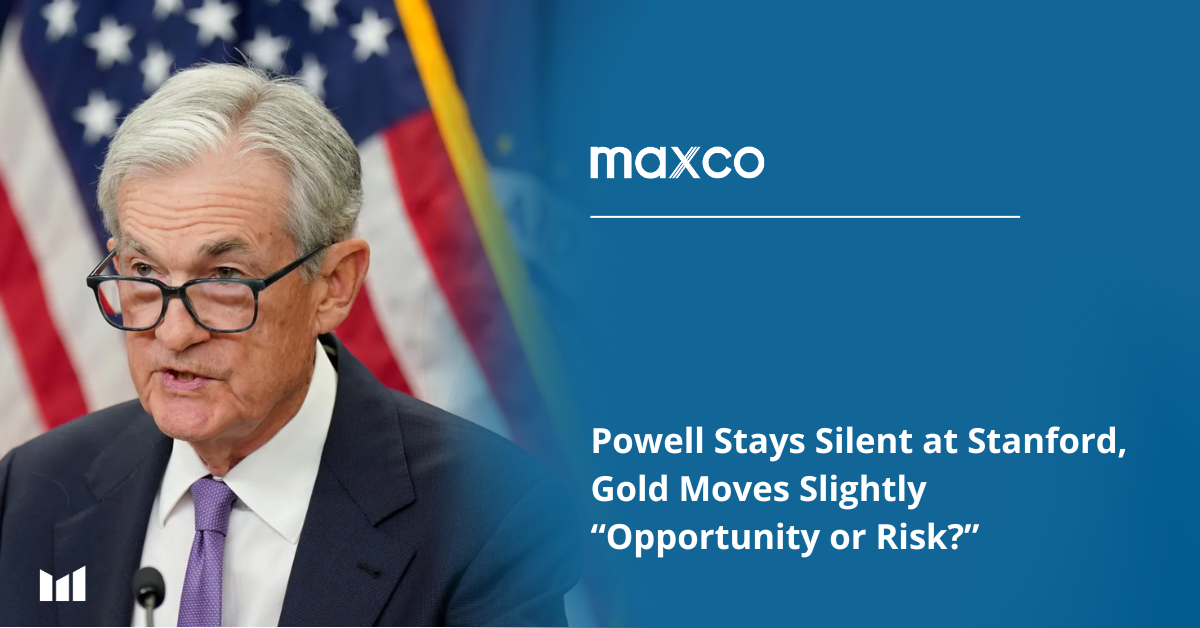
Maxco Futures — In a speech at the Hoover Institution, Stanford University, Jerome Powell chose not to provide any guidance on the economic outlook or monetary policy. For parts of the market, this silence reflects the Federal Reserve’s caution amid political pressure and uncertainty ahead of the rate decision. For others, the lack of clarity signals potential shifts in policy direction and growing chances of leadership changes at the central bank under the new administration — opening wider room for speculation and volatility.
Powell — who previously held back expectations of aggressive rate cuts — appeared intentionally distant from discussing interest rates or inflation in this latest address. The move stands in contrast to President Donald J. Trump’s recent public pressure urging the Fed to cut rates immediately, amid strong rumors that Trump is preparing to replace Powell before year-end.
Analysts view Powell’s decision to withhold commentary as a strategic move to safeguard the central bank’s independence. This comes at a time when Washington is accelerating discussions around a potential reshuffle of Fed leadership — a development that some fear could expose monetary policy to political influence.
For markets and economic participants, Powell’s silence sends two signals. On one hand, the central bank appears committed to maintaining credibility and autonomy from political directives. On the other, the lack of clarity on interest rates leaves market expectations fragile — especially ahead of the next monetary policy meeting, when many expect a further rate cut.
Ade Yunus, ST WPA
Global Market Strategies